Friday, 31 March 2017

Brands - who owns what?!

Brands always interest me as I always see them as separate to each other, but in reality many companies own different brands. The ones that intrigue me are the brands that I think are completely unconnected.

Below is a list of companies and some of the brands they own:

- Mondelez: Oreo, Cadbury, Milka, Philadelphia, Dairylea, Ritz

- Unilever: Comfort, Dove, Flora, Hellmann's, Lynx, Magnum, Ben and Jerry's

- Mars: Pet food, Dolmio, Uncle Ben's, Starburst, Wrigley's Chewing Gum, Mars Bars, Snickers

- Nestle: Kitkat, Maggi, Pet food, Nescafe, Breakfast cereals, cereal bars

- Proctor and Gamble: Fairy, Head and Shoulders, Herbal Essences, Oral-B


I find it interesting that many consumers are unaware some of these brands are even connected, especially when you may consider them to be "competitors" of each other, for example I always thought Head and Shoulders and Herbal essences were competitors so change my shampoo occasionally to try out a new brand and it turns out they are technically the same company!

I also had no idea that Mars who produce Mars Bars, Snickers,Twix etc. also offer pet food and sell Uncle Ben's rice. In my opinion, these products aren't connected and this leads me to ask; Does it hinder a company if they have items in different product categories?

Surely, you can't be a strong market leader in all categories when you have a variety of different products ranging from chocolate to detergent? However it clearly is worth doing as many of the above companies have a wide portfolio range. I love anything like this that makes me wonder how things work as I am so curious about random things!


Thursday, 23 March 2017

Chocolate without sugar?

Chocolate is an indulgent treat that many people enjoy on a more frequent basis than we would care to admit. It is creamy, rich and melts in the mouth and there are not many people who would decline a square or two if they were offered. I have just eaten a few squares of dark chocolate which is my latest guilty pleasure, trying to kid myself it is healthier as it is dark chocolate.

My favourite dark chocolate to date is Green and Blacks espresso dark chocolate, it has a real bitter sweet taste to it and is a real treat. It definitely motivates my to finish my dissertation which no surprise is all about chocolate!

I got thinking, could chocolate be made healthier by using sweeteners or another sugar alternative? If this was possible, would consumers be interested in trying this or do they want chocolate to contain sugar?

This is good food for thought - obviously natural sweeteners would have to be used but in general how much do consumers know about sweeteners and are they willing to eat products with multiple sweeteners or are consumers suspicious of the potential long term affects of them?

These are all questions I hope to find the answer to!

Sunday, 1 January 2017

Happy New Year!

Happy New Year! I can't believe it is 2017 already, the past 6 months have been really busy but last night as 2016 drew to a close and champagne bottles were opened, I began thinking of new year resolutions. As I'm sure many people will have decided theirs, I thought I would at least try and stick to mine this year as I am normally quite good at sticking to resolutions for a while then give in!

My first resolution is to continue working hard but giving myself more time to do things I love; socialising with friends and family, baking, cooking, tennis and generally enjoying myself, allowing myself time to do these things.

My second resolution is to complete my degree to a high standard and believe in myself which should make writing assignments easier! Must stop procrastinating!

Thirdly, I would like to pick up a new hobby, especially after I graduate. I would like to learn a new language so I become fluent in it, learn the piano properly or take up singing lessons so I have something fun to work on in the evenings.

I would like to get a job once I graduate and I want it to be something I really am passionate about like my previous job. Recently, I went for an interview and I loved the idea of this job so fingers crossed!

Finally, I want to go travelling and make plans - Rome, Egypt, Greece, Australia and Iceland are just some of the places I want to explore :)

Happy 2017 everyone!

Monday, 18 July 2016

Popular French Foods- c'est bon!

As I am off to Paris at the end of the month, I thought I would explore some popular French dishes and foods. I have always loved France, their culture, their language and the food alors je suis très heureux!  Below I have listed popular French main courses and desserts, most are well known and heard of throughout the world.

Main courses
Quiche Lorraine – This started out as a pie without a lid, filled with custard and smoked bacon and later on cheese was added to enhance the recipe. 

Moules Marinières – This is mussels, they are often cooked in a white wine and parsley sauce and served with chips.

Boeuf Bourguignon – This is a stew made with beef braised in red wine, flavoured with garlic, onions, and mushrooms, seasoned with a bouquet garni which is just a bag of herbs.

Coq au vin- This was originally made with a rooster, but chicken is now used. It is cooked in a red wine sauce with bacon, butter, and beef stock.

Gratin dauphinois – This is a classic French dish made with thinly sliced potatoes, crème fraîche with cheese which is très délicieux!
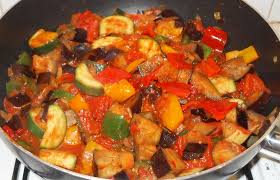
Ratatouille - A vegetable dish including onions, courgettes, tomatoes, aubergines, and peppers, fried and stewed in oil and sometimes served cold. Sometimes served with rice or bread and used to be a side dish but now is often a main course.


Escargots de Bourgogne – Quite simply snails baked in their shells with parsley butter.

Canard à l'Orange – It is a classic French dish in which a duck is roasted and served with an orange sauce. It is very succulent and I highly recommend that you try it!


Desserts
Mille feuille – This is made of three layers of puff pastry and in between the layers is cream (crème pâtissière) but sometimes jam is also added. The top pastry layer is decorated with things such as icing sugar, cocoa powder or glazed with icing, often decorated with chocolate drizzled on top of the icing.

Crème brûlée – This is rich custard topped with a hard layer of caramel. It is normally vanilla flavoured custard but can also be flavoured with other ingredients such as chocolate, coffee, cinnamon, amaretto, orange/ lemon or hazelnut for example.

Éclair – This is an oblong pastry made with choux dough, in the middle is a cream or custard and it is topped with chocolate typically. It is similar to profiteroles which are round instead of oblong. The cream or custard filling can be flavoured with vanilla, coffee or chocolate for example and the icing topping is often fondant icing or chocolate. Sometimes is it caramel and in this case it may be called “un bâton de Jacob.”

Macarons – These are meringues made with icing sugar, ground almond and food colouring. They are typically filled with buttercream, ganache or jam and are very colourful.

Tarte Tatin – This is an upside – down tart where the fruit are caramelised in butter and sugar before the tart is baked. Apples are usually included in the recipe, but other fruits can also be used.

Soufflé  - These are lightly baked cake and can be served as a savoury or sweet dish. They are fluffy and puffed up by the egg whites. Typical ingredients in soufflés include cheese, jam, fruits, chocolate and citrus fruits such as lemon.
Madeleine - These are very small cakes in the shape of a shell as they are baked in special pans. The recipe contains finely ground almonds normally and some recipes use lemon zest to enhance the flavour.

Pain au chocolat – Chocolate filled pastry, similar to puff pastry; it is similar to a croissant and both can be served hot or cold.


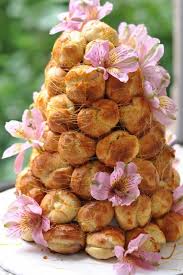
Croquembouche – This French dessert is made of choux pastry balls piled into a cone shape and is often served at weddings and other celebratory events. It is covered in threads of caramel spun sugar and may also be decorated with sugared almonds, chocolates and occasionally is covered in macarons or ganache.

Friday, 15 July 2016

Working in the chocolate industry

I have recently completed a year placement at Mondelēz International in Bournville. Not many people I have spoken to have heard of Mondelēz International except my foodie friends - Mondelēz  is the company that owns the famous Cadbury brand as well as Oreo, Philadelphia, Milka, Dairylea and Belvita as well as loads of other brands.


I was lucky enough to work with biscuits and cheese and some chocolate, so I thought I would explain my job role. I was working in Regulatory Affairs which involves looking at the legal side of the products I work with. For example; I looked at new packaging designs, New Product Development plans, all types of advertising from television ads to magazine articles, I completed research for the company, replied to consumer queries and tracked all the salt contents of our products - that is only some of the work I covered on a daily basis!

So it was extremely varied which meant I never got bored as I always had something new to do. The best part was learning about new products that aren’t on the market yet and might not be for the next few years and supporting the products, helping with pack design etc. In my first few weeks, we learnt about the roles and what was required as well as having a tour of the pilot plant and the factory which was great! I also went to Cadbury World, but purely for research purposes you understand – the free chocolate and tour was a bonus!

It was great as you can always smell chocolate and try new products that are either new to supermarket shelves or are about to be available to the public – sometimes we even got to try products that the company work on solely for other countries so this was interesting as we got to try items that we wouldn’t otherwise try such as chocolates from India, Greece and Turkey for example.

The people that work at Mondelēz International are all lovely and I am sad to say I didn’t get to meet an oompa – loompa! I learnt a lot during my placement especially the importance of a balanced diet – an apple in one hand and a Cadbury Dairy Milk bar in the other! J

Nananana...super foods!

Super foods are foods that are supposed to be great for us to eat as they are beneficial to us in several ways. For example, they can prevent cancers, lower cholesterol levels and generally improve and maintain health as well as supposedly maintaining a positive mood!

There is no actual definition of a super food but they are full of antioxidants, minerals and vitamins. It is important to eat a well-balanced diet as no food alone is able to provide you with all the vitamins and minerals you need.

My favourite thing of all the super foods is just how versatile they are! Blueberries can be eaten as a snack, made into a smoothie or used in main meals such as a blueberry coulis with a steak for example J

List of some super foods:
avocado                  
blueberries, blackberries etc
broccoli, kale and spinach       
tomatoes and beetroot
salmon
oranges and kiwi
beans and lentils
dark chocolate
mango and pomegrante
quinoa and nuts

Avocados
Avocados are one of my favourite superfoods as again they are versatile and are high in omega 3 fatty acids which are the good fats – monounsaturated fat. They are high in protein and low in sugar as well as being full of vitamins and minerals such as fibre, vitamin B, magnesium, iron and potassium. They are also high in antioxidants which are good as these help reduce cell damage.


Avocados are good for your heart because if they reduce blood cholesterol levels then this reduces the risk of heart problems and they also can increase good cholesterol. They can reduce inflammation due to the carotenoids and omega-3 fatty acids. The high levels of monounsaturated fats can help regulate blood sugar levels and blood pressure; the antioxidants can help maintain your immune system. 

Avocados are advantageous if you want healthy skin, with Vitamins C and E keeping the skin nourished and the fibre in avocados helps keep digestion on track, maintaining a healthy weight due to less snacking as it keeps you fuller for longer. On the other hand, eating them too often can lead to weight gain as they do contain some bad fats. Once again it is important to eat all foods in moderation and the advantages outweigh the disadvantages and enjoy what you are eating and experiment with food!

Thursday, 7 July 2016

Preventing Food Waste

Food waste is an important issue that many food manufacturers and the government are trying to reduce or prevent by setting up and supporting initiatives designed specifically for this purpose. For example, WRAP (Waste Resources Action Programme) are working with Love Food Hate Waste to help consumers reduce food wastage in the home which will help save money and benefit the environment too. Since 2007, food wastage has been reduced by 21%, saving consumers £3.3 billion a year. (Love Food Hate Waste, 2014)

It is important to reduce food wastage because it is unethical due to the amount of people who don’t have enough food to eat in other countries as well as the UK. It is also wasting resources such as water and creates greenhouse gas emissions.

With it now being summer and BBQs coming up soon, food waste is on my mind along with other things such as general excitement spending time with family and friends and hoping for lots of sun! This is why I have compiled a list on how to prevent food wastage below.

Tips on how to prevent food waste:
1)   Write a shopping list of foods you need so you don’t buy extra which could go to waste
2)   Plan portion sizes – don’t cook too much pasta for example then throw it away
3)   Use leftovers; plan a meal using them instead of throwing it away          
4)   Don’t rely on best before dates; best before means it is safe to eat after this date it may just not taste as fresh for example.
5)   Use up food items in your cupboard and freezer and keep the ingredients organised so older food doesn't get pushed to the back of the cupboard e.g. make a lasagne with tinned and fresh tomatoes
6)   Plan meals for the week so you know what you are cooking in advance and you can freeze leftovers
7)   Store leftovers in foil/ cling film to keep them as fresh as possible and put in the fridge/ freezer once finished
8)   Cook with other people such as family or flatmates to prevent wastage
9)   Buy foods with a long shelf life where possible e.g. don’t buy meat that is due to go off the next day if you know you won’t eat it that night.

10)   Don’t buy items on offer e.g. 2 for the price of 1 if you know you won’t be able to eat it all. Often, these deals aren’t always beneficial anyway, not always being the cheapest way to purchase food